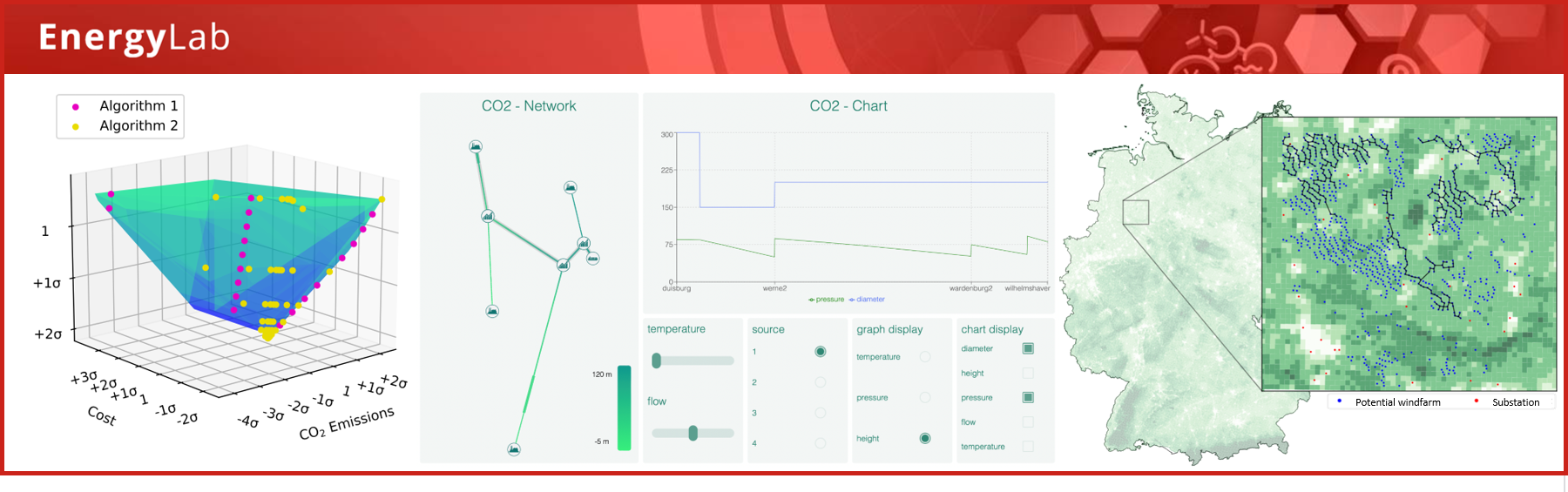
 The energy systems of the future consist of highly interconnected infrastructures in which electricity, heat, and transport sectors increasingly interact. The ongoing energy transition and the global shift toward CO₂-neutral energy supply require the integration of numerous decentralized and often small-scale energy producers into existing energy networks. As these systems become more complex, their planning and operation demand advanced data-driven methods of mathematical optimization and intelligent control. The EnergyLab develops innovative solution approaches in close cooperation with industry partners to support both the strategic expansion and the efficient operation of energy networks. The focus lies on designing mathematically optimized decision-support tools that ensure security of supply while minimizing investment and operating costs. A central research approach is the identification and exploitation of underlying problem structures, enabling the development of efficient solution methods that can also be transferred to related applications in critical infrastructure systems.
Projects
In the third phase of the Research Campus MODAL, the EnergyLab develops mathematical optimization and digital modeling solutions for the planning and operation of future energy systems (see projects of the first two phases below). In close cooperation with industrial and academic partners, including Open Grid Europe, BEW, and international research partners, the lab addresses key challenges in sustainable infrastructure, chemical process modeling, and large-scale energy system optimization.
Sustainable Planning and Operation of Gas Transport Networks
Gas transport networks play a crucial role in the transition toward sustainable energy systems and must adapt to changing supply structures and new energy carriers. In cooperation with Open Grid Europe we develop advanced planning tools for gas network operation and expansion. Our research focuses on the combination of simulation and mathematical optimization to further develop the planning tool COCOS and to enable data-driven decision support for sustainable long-distance gas transport.
Sustainable Planning and Operation of District Heating Networks
District heating networks are a key component of future climate-neutral urban energy systems. Together with Berliner Energie und Wärme AG (BEW), we develop optimization-based approaches for the holistic planning and operation of district heating systems. Our research addresses the entire planning horizon, ranging from operational planning to long-term investment decisions. To cope with the resulting extremely large-scale optimization problems, which often contain hundreds of millions of variables and constraints, we design advanced decomposition techniques for mixed-integer optimization models. Further research focuses on multi-objective optimization to compute optimal trade-offs between economic and environmental objectives.
Digital Twin of an lnnovative Chlorine Storage Technology
Chlorine production is among the most energy-intensive processes in the chemical industry and therefore plays an important role in future energy-flexible industrial systems. Operating such processes efficiently requires adapting production schedules to fluctuations in energy availability—producing more when renewable energy is abundant and less during periods of scarcity. Achieving this flexibility depends on effective storage solutions for intermediate chemical products. Researchers at Freie Universität Berlin have developed a novel chlorine-based chemical storage technology, but transferring this concept from laboratory experiments to industrial-scale applications poses significant challenges. In collaboration with Freie Universität Berlin, we develop a digital twin of a novel chlorine storage technology. Our work combines detailed mathematical simulation models of reaction mechanisms to create a high-fidelity representation of the system. Employing this model, we analyze scaling parameters for a more detailed understanding and to support the transfer of laboratory-scale processes to industrial production environments.
Mathematical Optimization Solutions for Energy Systems
Modern energy systems give rise to extremely large and complex optimization problems that require specialized algorithmic approaches and high-performance computing. In collaboration with technology partners including Gurobi, GAMS, Hewlett Packard Enterprise as well as the Research Campus MODAL SynLab and HPCLab, we develop advanced mathematical optimization solutions for large-scale energy system models. One of our developments is the ensemble solver Smoothie that efficiently exploits HPC systems to solve very large optimization instances. Morever, we develop efficient solution methods for stochastic and robust optimization models to enable decision making of transition pathways of multi-energy systems under uncertainty.
Past projects
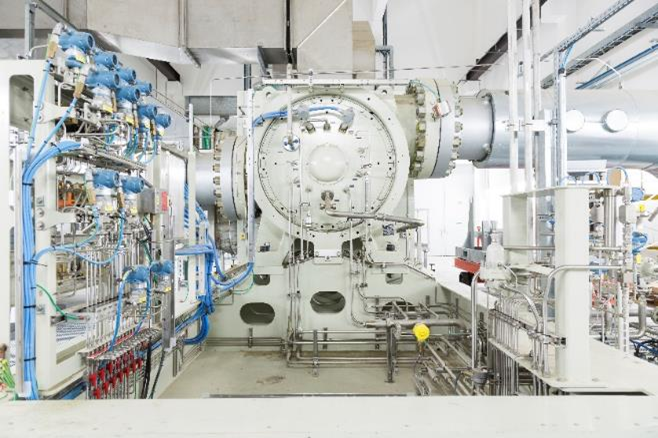 | Gas NaviIn cooperation with Open Grid Europe, the GasLab and EnergyLab in the first two phases of Research Campus MODAL developed mathematical methods for a digital decision-making system for the control of a natural gas transmission network. The decision support system for network control was developed as a MILP in a Course2fine approach. Integration of hydrogen-mixing, has extended the system for the analysis of decarbonization options. In 2020, the system was selected as a finalist for the prestigious INFORMS IAAA Award. |
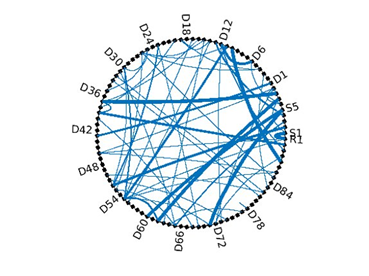 | EnergyLab PrognosisEnergyLab-Prognosis is a hybrid forecasting system for hourly gas flows, combining mathematical optimization and machine learning to achieve high forecasting accuracy and operational efficiency. It builds on foundational research on the combination of mathematical optimization and machine learning and has evolved into a comprehensive solution for a multitude of applications, such as forecasting individual customers, renomination patterns, and aggregated zone forecasts. Its unique combination of offline optimization, real-time adaptability, and automated retraining ensures consistently high performance with mini-mal manual effort. This cooperation with Open Grid Europe was selected as a finalist for the IIF Forecasting Practice Competition 2025. |
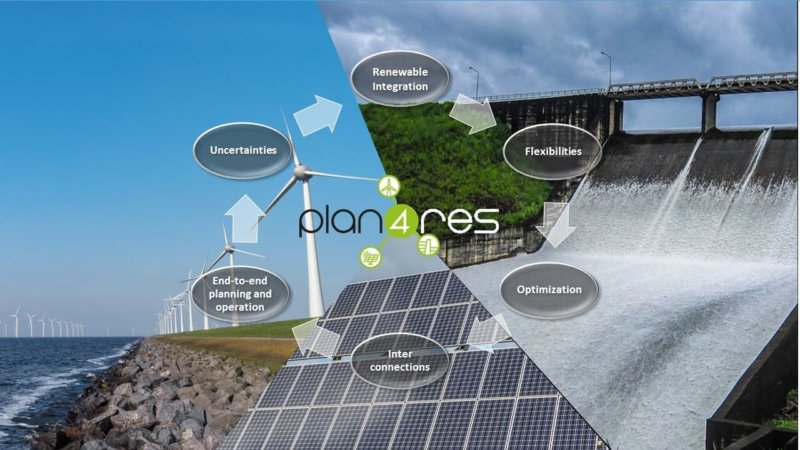 | EnergyLabs associated projects
|